Global Widget

Every year on the 1st of July, we gather around a familiar question.
What does independence mean?
We answer with history. We answer with remembrance. We answer with gratitude for the courage and sacrifices that made Rwanda’s sovereignty possible. These reflections matter. They anchor us in a story that deserves to be remembered.
But perhaps this year, Independence Day invites us to ask a different question. Not what independence has meant. But what independence will ask of us.
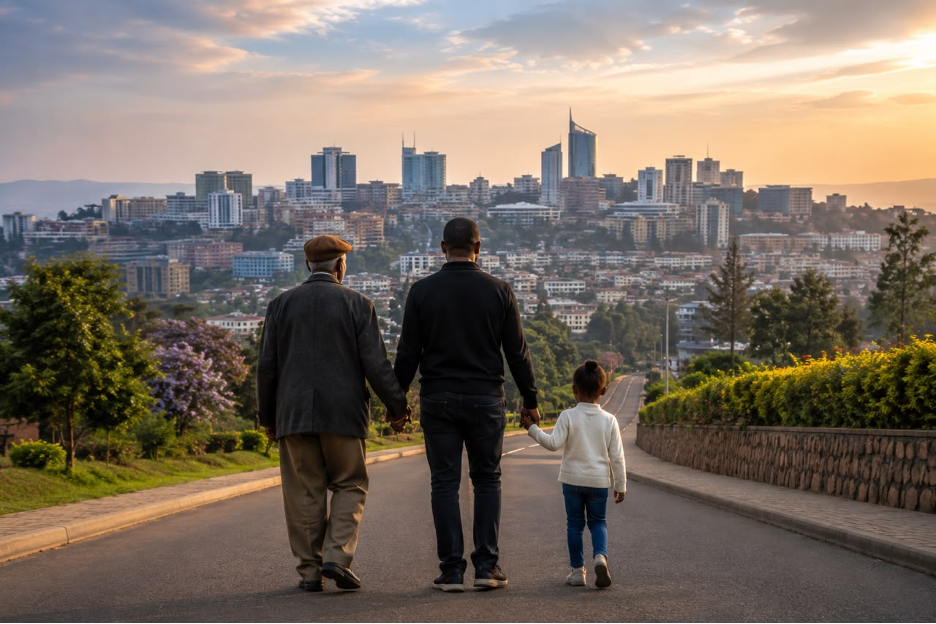
Imagine Rwanda fifty years from now.
A child born today is now an elder. The technology that surrounds us has become obsolete. New industries have emerged. New challenges have replaced the ones we debate today. The world has changed in ways we cannot fully predict. On that future Independence Day, people may still look back with gratitude. But I wonder whether they will judge us by how well we commemorated our history or by how we also courageously prepared them for their future.
Independence is not only something to celebrate. It is something that keeps asking more of every generation. Political independence gave Rwanda the right to determine its own destiny. Yet history has shown that freedom, by itself, is never enough. Freedom creates possibility. It does not guarantee what we will do with it.
That part belongs to us.
Every generation inherits the same gift. No generation receives the same responsibility.
Those who came before us confronted the defining questions of their time. Ours are different. They are shaped by technological change, demographic shifts, climate pressures, evolving economies and an increasingly interconnected world. The questions have changed, but the responsibility remains the same.
To leave our beautiful Rwanda stronger than we found it. If Independence itself could speak to Rwanda fifty years from now, I doubt it would begin by asking how many speeches we delivered or how beautifully we celebrated this day. It would ask quieter questions. Questions whose answers are written not in ceremonies but in everyday choices.
It might ask:
Did you remain curious?
When the world changed around you, did you continue asking difficult questions? Did you encourage children to wonder rather than simply memorize? Did universities reward inquiry? Did workplaces welcome new ideas? Did communities create space for respectful dialogue?
Curiosity is often treated as a personal quality. In reality, it is also a national asset. Societies that stop asking questions rarely discover better answers.
It might also ask:
Did you keep imagining?
The greatest expression of independence is not simply the freedom to govern ourselves. It is the freedom to imagine futures that have never existed before. Every significant transformation begins as an idea that once sounded unrealistic. A teacher imagines a different way to educate. A young entrepreneur imagines a solution no one has attempted. A researcher imagines a breakthrough. A community imagines a way of resolving disagreement without deepening division. Even peace begins as an act of imagination. It asks people to believe that tomorrow does not have to repeat yesterday.
Countries do not stop growing only because they lack resources. Sometimes they stop growing because they stop imagining possibilities beyond what already exists. Independence gives a nation the freedom to choose. Imagination determines what it chooses. Perhaps Independence would continue.
Did you build trust as intentionally as you built infrastructure?
Roads connect places. Trust connects people. Buildings can rise within months. Trust often takes years, sometimes generations. It is built through fairness, accountability, consistency and the quiet confidence that institutions and communities will do what they promise.
For a peacebuilding organization, this question carries particular significance. Peace is not sustained only through the absence of conflict. It is sustained when people believe they belong, when they feel heard, when institutions earn confidence and when dialogue remains possible even in moments of disagreement.
Future generations may admire the physical legacy we leave behind. They will live inside the social legacy we create. Independence would ask another question.
Did everyone believe they belonged in Rwanda’s future? Not only those with influence. Not only those whose voices were already loud enough to be heard. But young people searching for opportunities. Women leading change in their communities. Persons with disabilities claiming their rightful place in public life. Farmers, artists, innovators, entrepreneurs, public servants and every citizen contributing in ways both visible and unseen.
A nation reaches its greatest potential when every person believes the future includes them. Belonging is more than representation. It is the confidence that your ideas matter, your participation matters and your future is connected to the future of your country.
And then, perhaps, Independence would leave us with one final question.
Were you brave enough to invent what you never inherited?
Every generation receives something precious from those who came before it. But inheritance is never the end of the story. The purpose of inheritance is not preservation alone. It is creation.
Our responsibility is not simply to protect the Rwanda we inherited. It is to imagine the Rwanda we have not yet seen. To build institutions that are stronger than the ones we received. To deepen trust where it is fragile. To expand opportunities where they are limited. To strengthen dialogue where misunderstanding exists. To live out our ancestor’s wildest dreams. To solve problems that previous generations could not have anticipated. To leave behind possibilities that did not exist when our journey began.
Maybe that is what independence has been asking all along. Not whether we remembered the past. But whether we used the freedom it gave us to shape a future worthy of those who will inherit it after us. Every generation believes it is inheriting a country. What it is really inheriting is a question.
What will you make possible that was impossible before you? As Rwanda marks another Independence Day, that is the most meaningful way to honor our past. Not by asking only what independence has done for us. But by asking what independence, fifty years from now, will say about what we chose to do with the freedom entrusted to us today.
HAPPY INDEPENDENCE DAY RWANDA